
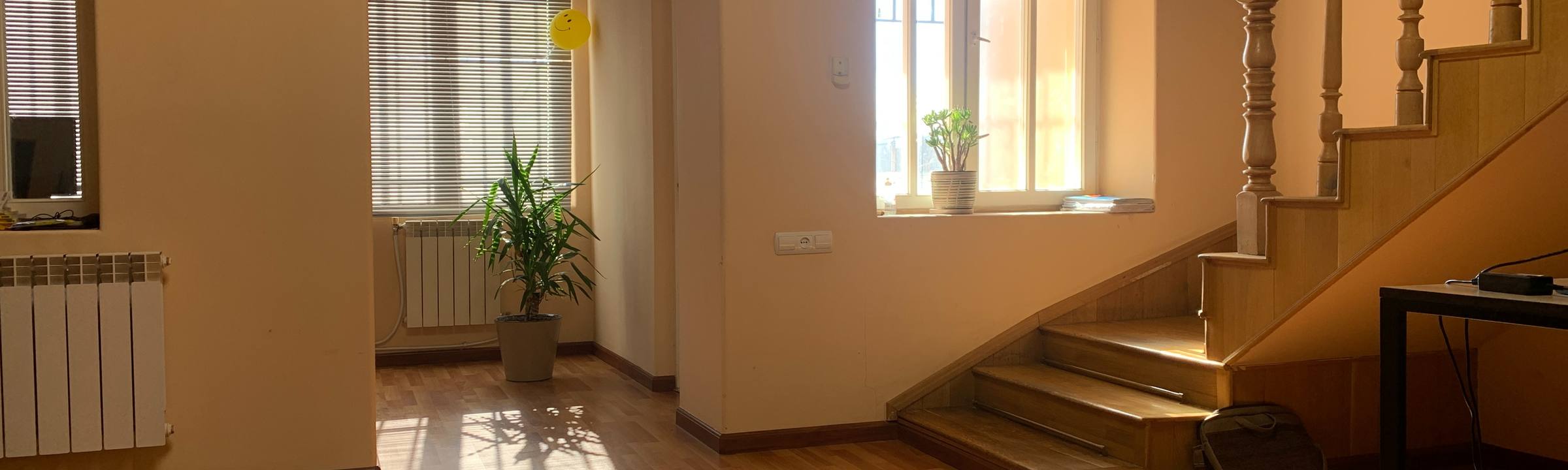
The stain colour changes the whole feel of a room, and it is hard to judge from a small sample card. This guide covers what to consider before you choose.
Start with the wood
Every species takes stain differently. Oak has an open, visible grain and takes colour evenly. Maple is tight-grained and can look blotchy with some stains. The same stain looks different on each, so always test on your own floor, not on a sample from another floor.
Light changes everything
A colour that looks warm in the store can look yellow or grey at home. Look at the sample in the room in morning light, at midday and under evening lamps. North-facing rooms look cooler than south-facing rooms.
Light, medium or dark?
- Natural and light tones make a room feel larger and brighter, and they hide dust and scratches better.
- Medium tones are the most flexible. They suit most furniture and styles.
- Dark tones look dramatic and formal, but they show dust, pet hair and scratches more.
Match what is already there
Consider your stair treads, handrail, doors, trim and cabinets. You do not need to match them exactly, but they should look like they belong together. If your stairs are part of the project, we stain them to match the floors.
Test before you commit
- Ask us to test two or three colours on your own floor, in a spot that will be hidden or sanded again.
- Look at each one for a day, in different light.
- Check the sample with your furniture and rugs.
Changing colour in an existing floor
Going darker is usually easier than going lighter. A full sand takes the floor back to bare wood, so you can start fresh, as long as the wood layer is thick enough. We check this before we quote.
Need help choosing? Request a free estimate and we will bring samples. See our refinishing page and the guide to wood grades.