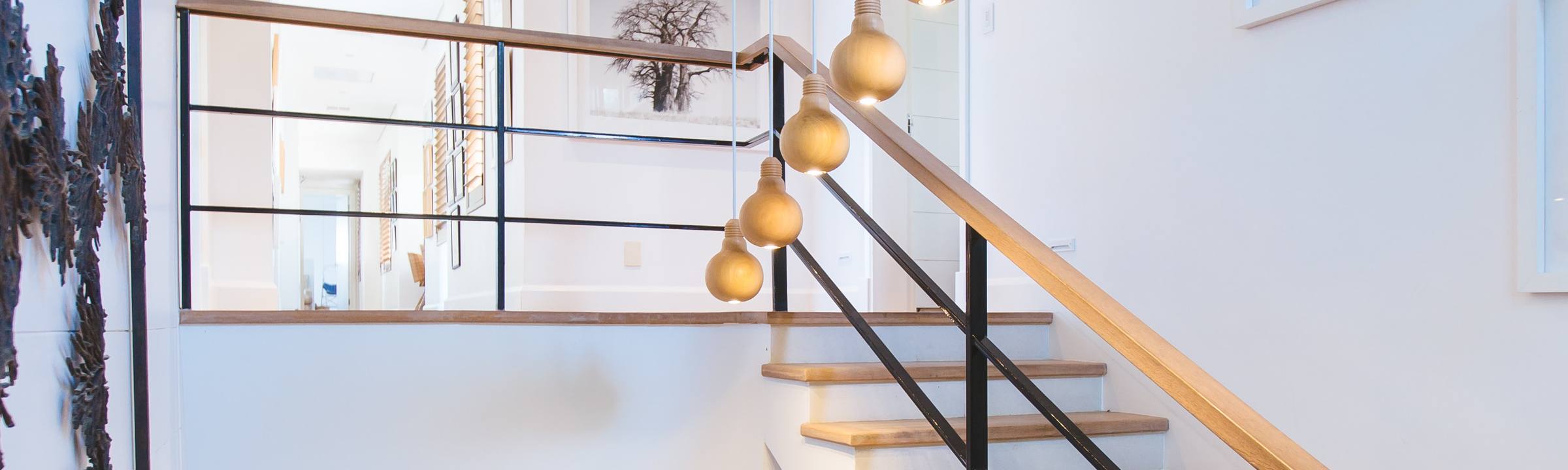
Balusters are the spindles under your handrail. They take up a lot of visual space, so changing them changes the whole staircase. Many homes built in the 1990s and 2000s have plain wood balusters, and replacing them is one of the most popular upgrades we do.
Wood balusters
Wood balusters are traditional and warm. They can be stained to match the treads and handrail, so the staircase looks like one piece. They suit classic and craftsman homes. Simple turned wood balusters are common in builder-grade stairs and can look dated.
Iron balusters
Iron balusters are slim and come in many designs, from plain square bars to decorative scrolls and twists. They let more light through, which makes an entry feel brighter and more open, and they need little maintenance. They suit both modern and traditional homes.
How they compare
- Look: wood feels warm and classic. Iron feels lighter and more architectural.
- Light: iron is slimmer, so the stair looks more open.
- Maintenance: iron needs very little. Wood may need refinishing with the stairs.
- Cost drivers: the number of balusters and the design have the biggest effect, and ornate designs take more work.
- Matching: both can be finished to go with your floors and handrail.
How a baluster update works
- We measure and agree the style, the finish and the spacing.
- Old balusters come out, and the rail and treads are repaired or prepared.
- New balusters are fitted securely and the finish is touched up so everything matches.
Often the existing treads and handrail can stay, which keeps the project smaller. If the treads are worn or the rail is loose, we can replace those at the same time.
Safety and code
Local building rules set limits on baluster spacing and rail height. We build to code and tell you if something has to change.
Thinking about an update? Send us photos of your stairs for a free estimate. See our stairs and balusters page and the guide to what affects stair work cost.